Optimizing Commercial Roof Drainage for Summer Rains
When summer arrives in Cincinnati, it brings the unpredictable nature of Ohio Valley weather. One afternoon might be hot and humid, and the next could deliver a torrential downpour that tests the limits of your building's exterior. For commercial property managers and real estate investors, these sudden, heavy rains present a significant challenge. If your commercial facility has a flat or low-slope roof, proper drainage isn't just a minor maintenance item—it is your primary defense against catastrophic water damage, structural strain, and unexpected financial hits.
Managing a commercial property means juggling tenant satisfaction, operational budgets, and long-term asset protection. The last thing you need is a sudden cash flow drop caused by an emergency roof leak that could have been prevented. By understanding how summer storms impact commercial roofing systems and taking proactive steps to optimize your drainage, you can protect your investment, extend the lifespan of your roofing materials, and ensure your tenants remain completely undisturbed during the storm season.
The Hidden Dangers of Ponding Water
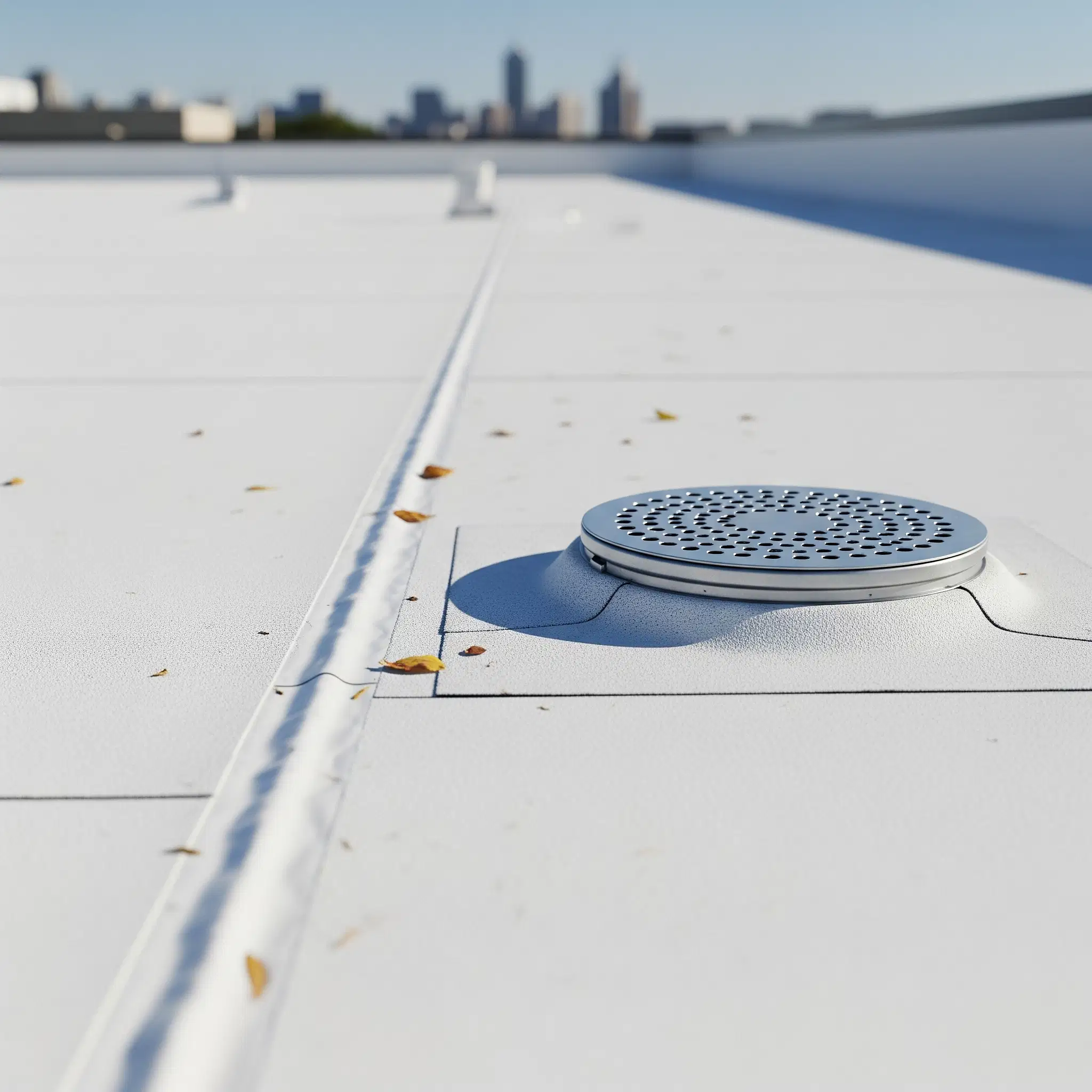
One of the most common issues property managers face after a heavy summer storm is ponding water. Industry standards define ponding as any water that remains on a roof for more than 48 hours after precipitation has stopped. While a small puddle might seem harmless, the reality is that water is incredibly heavy. Just one inch of water over a 100-square-foot area weighs over 500 pounds. On a large commercial flat roof, this excess weight can cause the roof deck to sag, creating a deeper depression that collects even more water during the next storm.
Beyond the structural strain, standing water acts like a magnifying glass under the intense summer sun, accelerating the degradation of your roofing membrane. Whether your building utilizes TPO, EPDM, or modified bitumen, prolonged exposure to ponding water breaks down the material's UV resistance and weakens the seams. Eventually, this leads to moisture infiltrating the insulation and the building interior.
Many property owners wonder if they should patch a recurring leak or opt for a full replacement. Often, if the membrane is still in good condition, correcting the underlying drainage issue and performing targeted roof repair is the most cost-effective solution. Adding tapered insulation to create a positive slope toward drains and scuppers can permanently eliminate ponding zones and save you from premature replacement costs.
Upgrading and Maintaining Your Gutter Systems
Even the best-sloped roof is useless if the water has nowhere to go once it reaches the edge. Commercial gutter systems must be specifically sized to handle the massive volume of runoff generated by large roof surface areas during severe downpours. Standard residential gutters simply cannot keep up with the flow, leading to overflow that damages exterior walls, compromises the foundation, and floods basements or ground-level retail spaces.
If your building consistently experiences overflow during heavy rains, it may be time to consider a professional gutter installation to upgrade to high-capacity commercial gutters and oversized downspouts. Properly sized systems ensure that water is rapidly channeled away from the building envelope, protecting your structural integrity.
Of course, even the largest gutters will fail if they are clogged with leaves, branches, and urban debris. Establishing a routine schedule for gutter cleaning is a simple, high-return investment. We recommend clearing commercial drainage systems at least twice a year, and immediately following any major severe weather events.
For property investors managing historic buildings in neighborhoods like OTR, drainage requires a specialized approach. Many of these beautiful, older structures rely on built-in box gutters that are integrated directly into the roofline. When these fail, water leaks directly into the building's interior walls. Maintaining these systems requires specific expertise, and timely soffit/box gutter repair & replacement is crucial to preserving the historical integrity and safety of the property.
Minimizing Tenant Disruption with Modern Technology
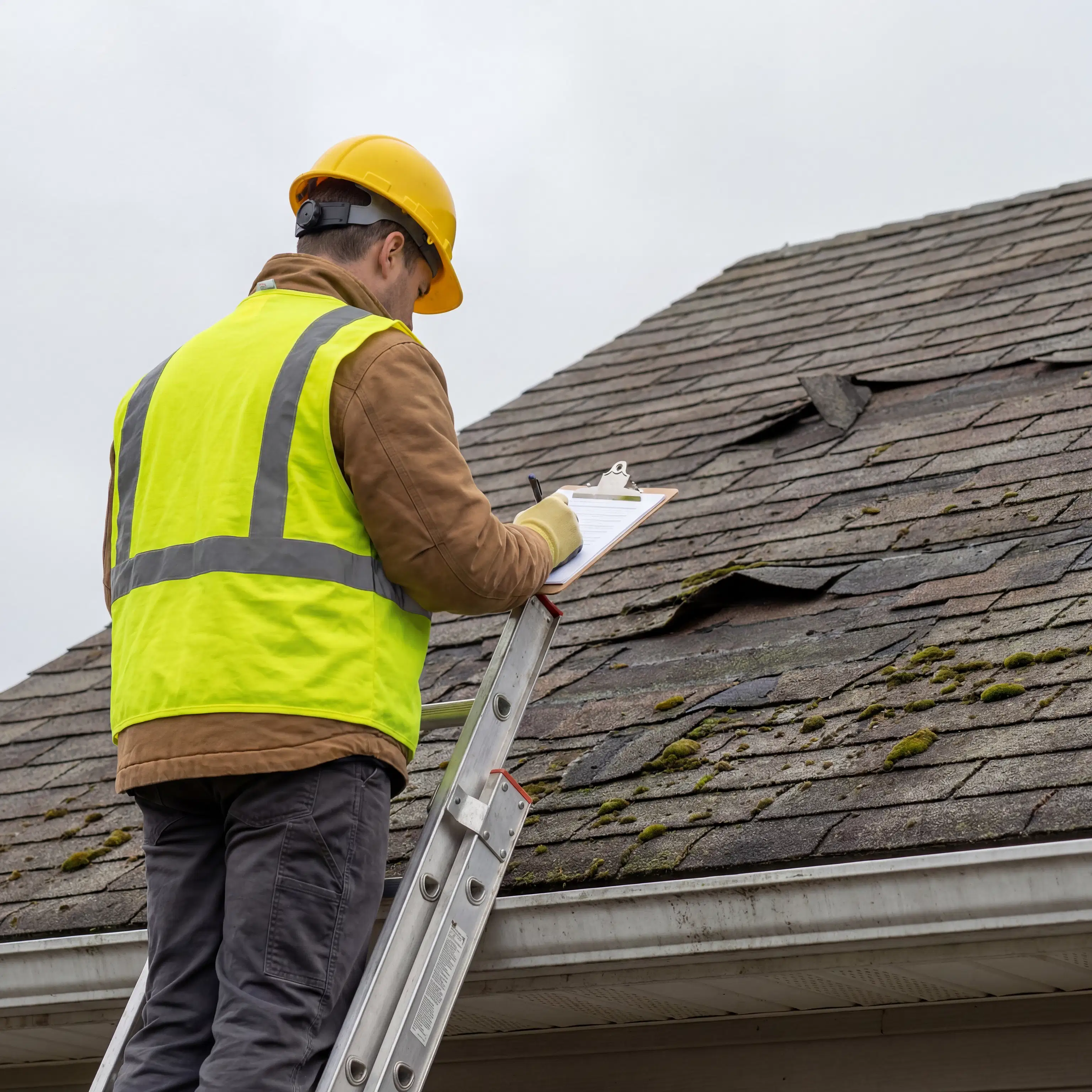
We frequently hear from property managers who are hesitant to schedule major roof inspections or maintenance because they worry about disrupting their tenants' daily operations. In the past, assessing a large commercial roof meant setting up ladders, walking the entire surface, and spending hours on-site. Today, advancements in roofing technology have completely transformed this process.
By utilizing drone-assisted roof inspections and AI-powered 3D aerial modeling, we can provide rapid, highly accurate assessments of your entire drainage system without ever needing to set foot on the roof or interrupt your tenants. This contactless approach allows us to identify clogged drains, failing seams, and ponding water with pinpoint accuracy.
Furthermore, this technology enables us to provide transparent, detailed digital estimates. You can see exactly where the drainage bottlenecks are occurring through high-resolution imagery, making it easier to justify maintenance budgets to stakeholders. When work does need to be performed, our project management process is designed around your schedule, ensuring that materials are staged efficiently and noise is kept to an absolute minimum.
Proactive Protection for Your Commercial Property
When severe weather strikes, the local market is often flooded with out-of-state contractors looking for quick repair jobs. However, commercial roofing requires a long-term partnership with a team that understands local building codes, regional weather patterns, and the specific needs of property investors. Proactive maintenance is the key to avoiding the stress of emergency leaks and the financial burden of premature roof failure.
Don't wait for the next major summer storm to find out if your commercial drainage system is up to the task. If you manage properties in The Tri-State area, our team is ready to help you evaluate and optimize your roof's performance. Reach out to Turner Roofing Solutions today via our contact us page to schedule a comprehensive, technology-driven inspection of your commercial roof and gutter systems.